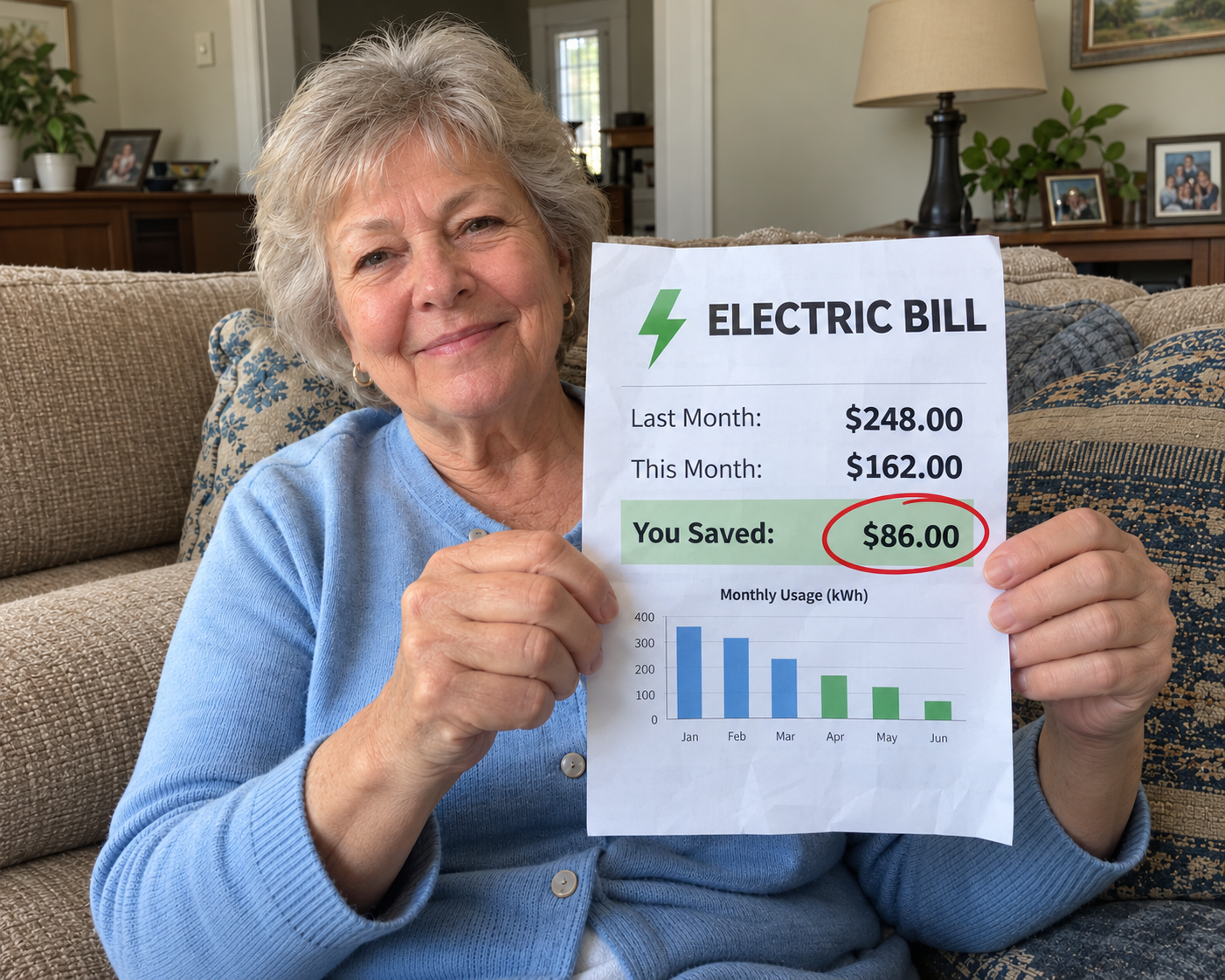
Margaret Hale is 69 years old. Taught third grade in Knoxville for 34 years. Retired, widowed, and living on a teacher's pension.
For decades her electric bill was just another envelope. Then it started creeping up. $160. Then $210. Then $248 last winter.
Same little house. Same old habits. She even started wearing a coat indoors. But the number kept climbing.
Margaret isn't one to complain. But when you're choosing between groceries and the heating bill… something has to change.
So Margaret did what any retired teacher would do. She started researching.
Does This Sound Like You?
You know that sinking feeling.
You open the bill, see the total, and your heart drops. Higher than last month. Again.
- Wearing sweaters indoors to avoid touching the thermostat
- Unplugging appliances every night "just in case"
- Mystery "delivery charges" and fees nobody explains
- Feeling like you have no choice but to pay whatever they ask
- Worrying how you'll keep up on a fixed income
- Getting solar quotes over $20,000 and closing the browser
Power companies have set the price for generations. You pay it. That's how it's always been.
Until now.
What Margaret Discovered in an Old Library Book
Margaret wasn't hoping for a miracle. She just wanted to knock $40 or $50 off her bill.
While browsing the library, she came across an energy idea from over a century ago — a simple concept that had been mostly forgotten.
Then she found that a small group of independent engineers had brought it back, rebuilt it with modern, affordable parts, and tested it in real homes.
- No solar panels. No windmills on the roof.
- No complicated rebates or paperwork.
- A simple weekend project using common hardware-store parts.
- Cost of materials? Less than one typical electric bill.